
Root canal therapy in Warners Bay
Signs you may benefit
- Throbbing or persistent toothache, especially at night
- Sensitivity to hot or cold that lingers after the source is removed
- Pain when biting on a specific tooth
- A pimple on the gum or facial swelling
- A tooth that has darkened compared to its neighbours
- A previous large filling that has started to ache
What root canal therapy actually does
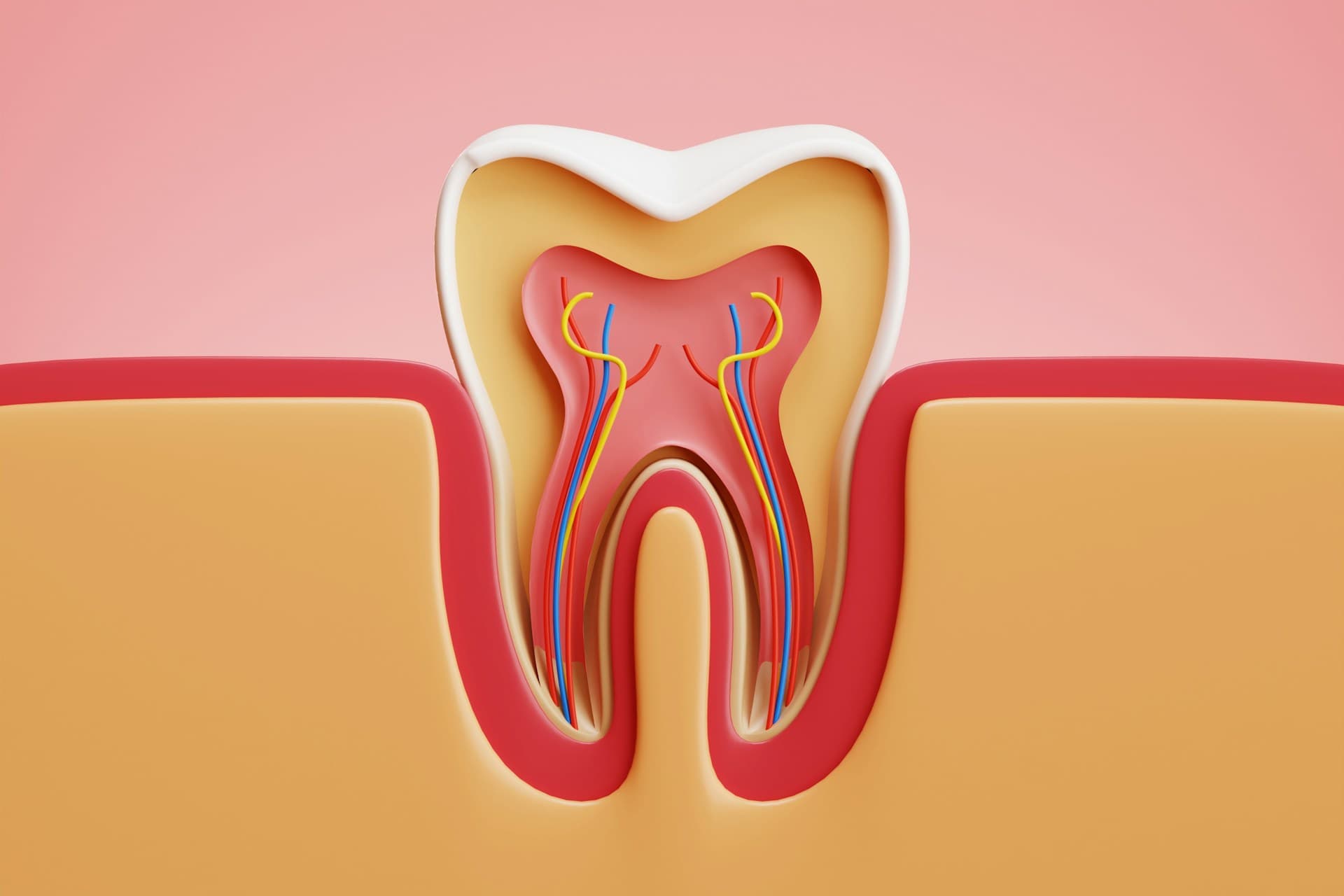
Inside every tooth is a soft tissue called the pulp, which contains the tooth's nerve and blood supply. When deep decay, a fracture or repeated trauma causes the pulp to become inflamed or infected, the result is usually toothache, sensitivity that lingers, swelling, or a quiet abscess that grows in the bone.
Root canal therapy removes the diseased pulp tissue, cleans and shapes the inside of the root canals, disinfects the system and seals it. The tooth itself stays — only the inside is treated.
When a root canal is the right answer
You'll likely be looking at root canal treatment if:
- A tooth aches spontaneously, particularly at night
- Hot or cold sensitivity lingers for longer than a few seconds
- Biting on a specific tooth is painful
- A pimple has appeared on the gum next to a tooth
- A tooth has darkened or there's facial swelling
Not every painful tooth needs a root canal — sometimes the answer is a deep filling, a crack repair, treatment of a gum infection, or simply waiting and watching. We'll always make sure root canal therapy is the right tool for your tooth before recommending it.
What the appointment is like
You'll be fully numb before we start. Many patients are surprised at how comfortable modern root canal treatment is — it has come a long way from the procedure with the bad reputation. We isolate the tooth with a rubber dam to keep it clean, use magnification to find every canal, and rotary nickel-titanium instruments to gently shape the canals.
Most cases are completed in one or two appointments of around 60–90 minutes each. Complex cases may take longer or benefit from referral to a specialist endodontist — and we'll be honest about that up-front.
Why a crown afterwards usually matters
A root-canal-treated back tooth has had its nerve removed and a portion of its structure removed to access the canals. That makes it more brittle than a natural tooth, especially under chewing forces. A well-fitted crown protects the remaining tooth from cracking and gives the treatment its best chance of long-term success.
For front teeth, a crown isn't always necessary — a well-bonded filling may be enough, depending on how much tooth structure is left. We'll talk through what's appropriate.
Honest expectations
Modern root canal therapy has a high success rate when performed well — and when followed by a properly fitted crown — but no biological treatment is guaranteed. A small percentage of root canals need re-treatment, surgical apicoectomy, or eventually extraction. Long-term outcomes depend on the original tooth's condition, the surrounding bone, the quality of the final restoration and your ongoing home care. We'll discuss what's realistic for your tooth, before treatment, not after.
What to expect
Diagnosis and imaging
We confirm the source of pain or infection with thorough testing and a targeted X-ray (sometimes a 3D CBCT scan). Not every painful tooth needs a root canal — we rule out simpler causes first.
Anaesthetic and access
The tooth is fully numbed, isolated with a rubber dam, and a small access opening is made through the top of the tooth so the canal system can be reached cleanly.
Cleaning and shaping
Using rotary nickel-titanium instruments and disinfectant rinses, the canals are gently cleaned along their length and shaped to receive a filling material.
Filling the canals
The canals are sealed with a biocompatible material that prevents bacteria from re-colonising the inside of the tooth.
Final restoration
Root-canal-treated teeth — especially back teeth — are usually weaker and benefit from a crown to protect against fracture. We plan this step at the same time as the root canal.
What to consider
- Root canal therapy has a high success rate, but no procedure is guaranteed — a small percentage of teeth need re-treatment, an apicoectomy, or eventually extraction.
- Mild discomfort or tenderness for a few days after each visit is normal.
- Without a properly fitted crown afterwards, root-canal-treated back teeth are at higher risk of fracture.
- Complex cases (curved canals, calcified canals, re-treatments) may benefit from referral to a specialist endodontist; we'll be honest about that at the consultation.
- Outcomes depend on the original tooth, surrounding bone, restoration quality and home care. Individual results vary.
All dental procedures carry risks. Suitability, treatment options, duration, costs and potential complications should be discussed with a registered dental practitioner. Individual results vary. Information on this page is general and not a substitute for personalised clinical advice.
Frequently asked questions
- Modern root canal treatment, performed under local anaesthetic with magnification, is typically much more comfortable than the toothache that brought you in. Most patients describe the procedure itself as 'not as bad as I expected'. Mild tenderness for a few days afterwards is normal and managed with simple pain relief.
Related services
Crowns & bridges
Custom-made porcelain crowns to protect heavily damaged teeth, and bridges to replace missing ones — designed to feel and function like natural teeth and to fit your bite, gum line and smile.
Read moreTooth fillings
Modern composite fillings repair decayed, chipped or worn teeth using tooth-coloured resin that bonds directly to the remaining tooth — restoring both appearance and function in a single visit.
Read moreEmergency dentist
Dental pain, broken teeth, lost crowns, knocked-out teeth and facial swelling can't wait. We keep emergency slots in the daily schedule so you can be seen, assessed and made comfortable as quickly as possible.
Read more


Ready to discuss root canal therapy?
Book a consultation with our Warners Bay team. We'll talk through your goals, the options available and any risks before you decide.