

Dental crowns & bridges in Warners Bay
Signs you may benefit
- A heavily filled, cracked or root-canal-treated back tooth
- A chipped or worn front tooth that's hard to restore with a filling
- A missing tooth where adjacent teeth could support a bridge
- An old crown that has discoloured, leaked or fractured
- A persistent ache when chewing on a previously restored tooth
What crowns and bridges do
A crown is a tooth-shaped cap that fully covers a damaged tooth — restoring its strength, shape and appearance. A bridge uses two or more crowns to span a gap where a tooth is missing, with a false tooth ("pontic") suspended between them.
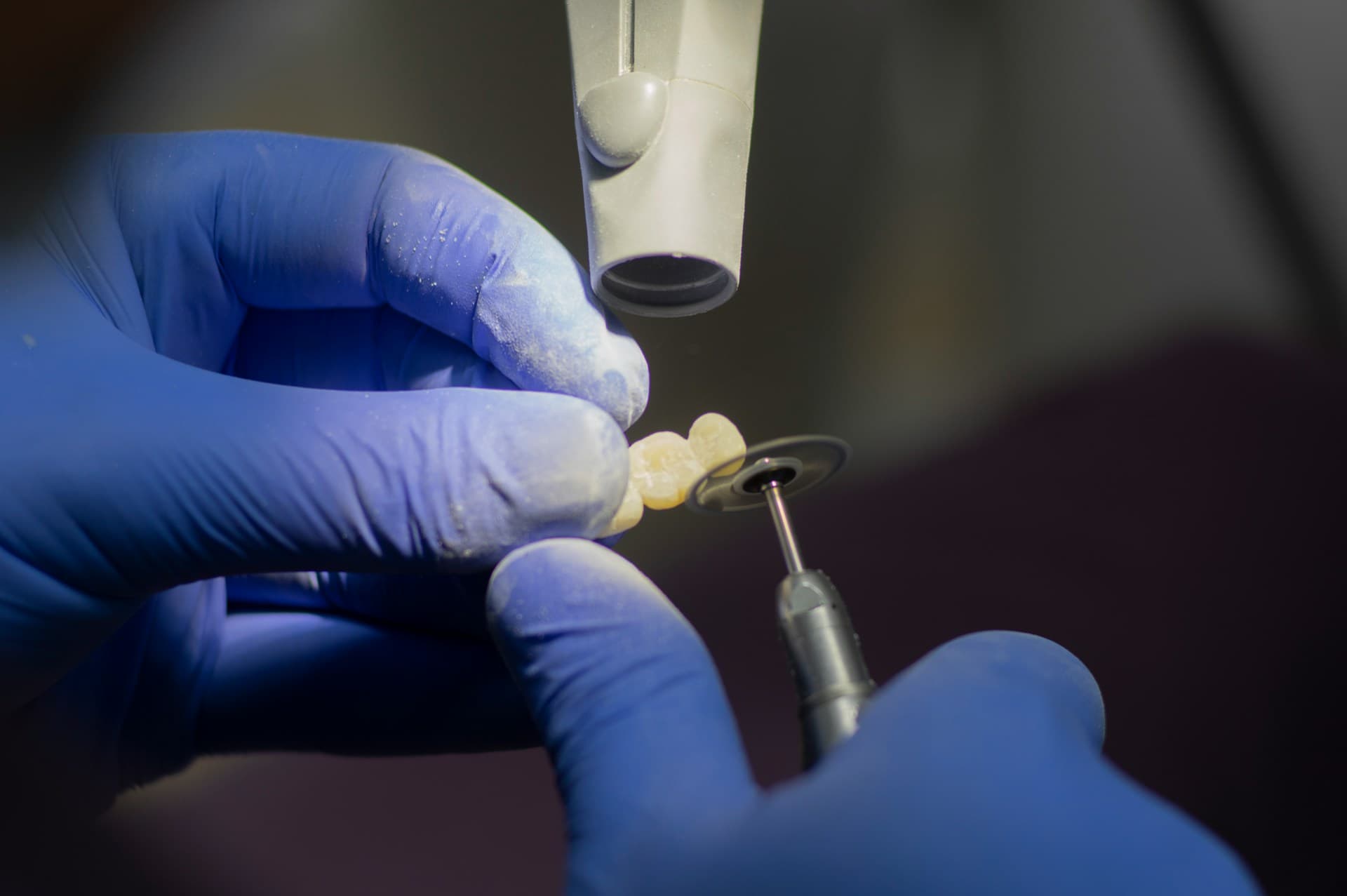
Both are made by digitally scanning your prepared teeth, designing the restoration to your bite, and milling or pressing it from porcelain or zirconia in a dental lab. The final result is bonded onto the tooth so it functions like a natural tooth.
When a crown is the right tool
Crowns are most often recommended when:
- A tooth has a large filling that's cracking or unlikely to last
- A tooth has had root canal treatment and needs structural protection
- A tooth has fractured below the cusps but the root is still healthy
- A front tooth is heavily worn, chipped or discoloured beyond what bonding alone can handle
Where a tooth is mostly intact and only part of it is damaged, an onlay (a partial crown) is sometimes a more conservative option — see ceramic onlays.
When a bridge is the right tool
Bridges suit gaps where:
- The teeth on either side of the gap are healthy enough to support a bridge
- An implant isn't suitable due to bone, medical or financial considerations
- The surrounding teeth already need crowns themselves
In many cases a single-tooth implant gives a better long-term result than a bridge because it doesn't require modifying the neighbouring teeth — but that's not always the case, and there are times a well-made bridge is the right answer for the patient and the gap. We'll talk through both options.
Materials we use
Our crowns and bridges are made from modern, metal-free ceramics:
- Lithium disilicate (e.max) — beautiful translucency for front teeth.
- Monolithic zirconia — exceptionally strong for back teeth or grinders, with realistic shading available.
- Layered zirconia — combines strength with hand-applied porcelain on the visible surface for premium aesthetics.
The right material depends on the position of the tooth, the load on the bite, and how visible it is when you smile.
Living with a crown or bridge
A bonded crown or bridge feels like a natural tooth. Day-to-day care is the same as the rest of your teeth — twice-daily brushing, daily interdental cleaning (with floss or interdental brushes around bridges), and a regular professional clean. We'll show you the right tools for cleaning around your specific restoration.
If you grind or clench, we'll also discuss a night splint to help protect your new crown or bridge from premature wear or fracture.
Honest expectations
Crowns and bridges are durable, well-studied dental restorations — but no dental work lasts forever. Over the long term, restorations can chip, debond or develop new decay at the margin, particularly if home care or recall slips. We aim to give you a realistic picture of likely longevity for your specific case before treatment, not after.
What to expect
Diagnosis and planning
We assess the tooth (or gap), surrounding teeth, gum health and your bite. Imaging confirms whether a crown, an onlay, or in some cases a different restoration is the right answer.
Tooth preparation
The tooth is gently shaped under local anaesthetic to make space for the crown. For bridges, the supporting teeth on either side are prepared the same way.
Digital impression
We take a 3D scan of the prepared tooth and your bite. The scan is sent to a local Australian lab to design and mill the final restoration.
Temporary protection
A temporary crown or bridge protects the tooth and keeps you comfortable while the lab fabricates the permanent restoration over 1–2 weeks.
Try-in and bonding
We try the final crown or bridge for fit, bite and shade — make any adjustments — and bond it firmly into place.
Long-term review
Crowns and bridges are reviewed at every routine check-up so we can monitor the margins, the bite and the surrounding gum tissue.
What to consider
- Crowns and bridges require permanent shaping of the tooth — once prepared, the tooth will always need a crown or similar restoration.
- Possible risks include sensitivity, the need for root canal therapy if the nerve is affected, and crown loosening or fracture over time.
- Bridges rely on the long-term health of the supporting teeth; if those teeth develop decay or gum disease, the whole bridge can be at risk.
- Implants are sometimes a better long-term answer than a bridge — we'll discuss the trade-offs between the two for your specific case.
- Aesthetic outcome depends on starting tooth colour, gum line, lab work and bonding technique. Individual results vary.
All dental procedures carry risks. Suitability, treatment options, duration, costs and potential complications should be discussed with a registered dental practitioner. Individual results vary. Information on this page is general and not a substitute for personalised clinical advice.
Frequently asked questions
- A typical all-ceramic crown starts from around $1,950 including the digital impression, lab fabrication, temporary crown and final bonding. Three-unit bridges typically range from $5,800–$7,500 depending on materials and complexity. We provide a written quote after consultation.
Related services
Dental implants
A tooth replacement option that helps restore the look, comfort and chewing function of natural teeth. Suitability is assessed clinically, and we'll talk through the options, risks and costs before you decide.
Read moreCeramic onlays
Ceramic onlays restore heavily damaged back teeth while preserving more healthy tooth than a full crown — a precision-milled porcelain restoration bonded over the chewing surface to rebuild strength and shape.
Read moreRoot canal therapy
A modern, well-tolerated treatment that can save a tooth with infected or inflamed nerve tissue — relieving pain and avoiding extraction. Performed under local anaesthetic with magnification and rotary instrumentation.
Read more

Ready to discuss crowns & bridges?
Book a consultation with our Warners Bay team. We'll talk through your goals, the options available and any risks before you decide.