
Digital intraoral scanning in Warners Bay
Why we ditched the goop
Traditional dental impressions use a putty-like material set in a tray held against the teeth for a few minutes. They work, but they're uncomfortable, gag-inducing for many patients, and prone to small distortions during transport to the lab.
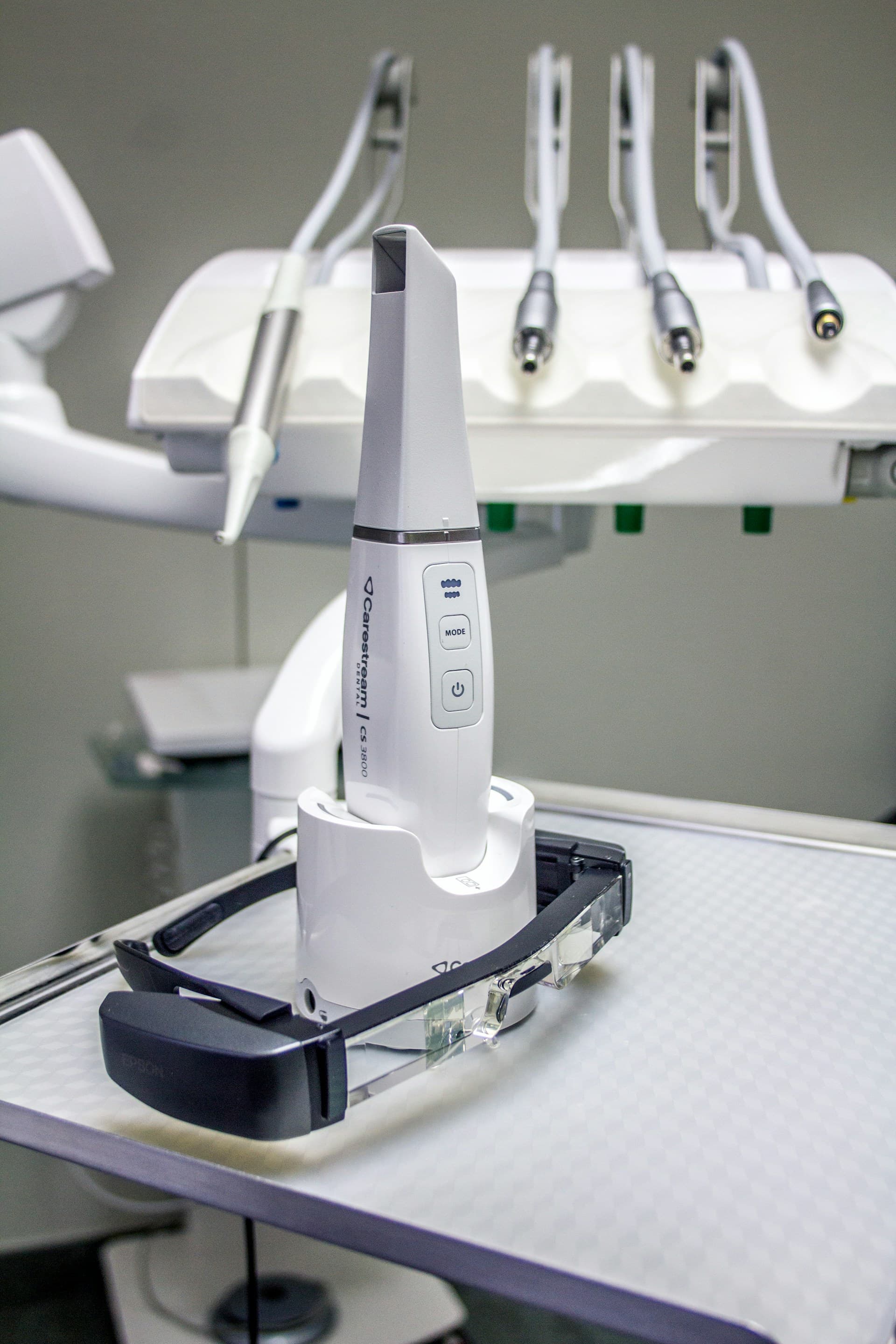
A modern intraoral scanner replaces the tray with a small wand that captures thousands of 3D images per second. The result is a digital model of your teeth and bite that's accurate, comfortable to capture, and instantly available on screen.
What we use scans for
Scans are now part of almost every appointment at Smile Star Dental:
- Crowns, bridges and onlays — designs go straight from the scanner to the lab, with no impression-material variance.
- Clear aligners — case planning, simulated outcomes, attachments and retainers all run from a scan.
- Dental implants — surgical planning combines scans with 3D X-ray (CBCT) data.
- Sports mouthguards and night splints — perfectly fitted from the scan, no goopy tray.
- Orthodontic monitoring — comparing scans taken months apart to detect early movement.
- Patient education — showing you, in 3D, what's actually happening in your mouth.
What an intraoral scan can — and can't — show
Scans capture surfaces: tooth shape, gum contours, bite alignment, recession, wear patterns, restoration margins. They don't capture what's between teeth or below the gum line. That's still the job of a clinical examination and, where relevant, X-rays.
We use scans alongside other diagnostic tools, not as a replacement for them.
Privacy and storage
Like any dental record, scans are stored securely and used only for your care unless you specifically consent to wider use. They aren't shared with third parties and they aren't used commercially.
What it feels like
Most patients describe the scan as "easier than a photo". You sit upright, breathe normally, and the wand passes over the teeth. There's no taste, no smell, no setting time, and no gagging. Children and anxious adults — including those who've never been able to tolerate impressions — usually do well with scanning.
What to expect
Quick prep
We dry the teeth gently and may dust them lightly to optimise scan quality. No trays, no impression material.
Scanning
The hand-held scanner is moved over each arch in a smooth pattern. The 3D model builds in real time on the chairside screen so you can see it as it grows.
Bite capture
We scan how your upper and lower teeth come together. This bite alignment is used for any restorative or orthodontic planning.
Review and use
The scan is reviewed for completeness and accuracy on screen, then sent securely to a lab or used for in-house planning.
What to consider
- Scans are radiation-free, but they don't replace X-rays — they show surfaces, not what's between or below the tooth.
- Heavy bleeding, very deep margins below the gum line, or extensive restorations can occasionally require a top-up scan or, rarely, a traditional impression.
- Like any dental record, scans are stored securely and used only for your treatment unless you specifically consent to wider use.
All dental procedures carry risks. Suitability, treatment options, duration, costs and potential complications should be discussed with a registered dental practitioner. Individual results vary. Information on this page is general and not a substitute for personalised clinical advice.
Frequently asked questions
- A full upper-and-lower scan with bite capture typically takes 5–10 minutes. Single-tooth scans for a crown or onlay are even quicker. There's no waiting for impression material to set, and no taste or gagging.
Related services
Clear aligners & orthodontics
Discreet, removable aligners and traditional orthodontics for adults and teens looking to improve crowding, spacing, bite or smile aesthetics. Suitability and timeframe are assessed clinically before treatment begins.
Read moreCrowns & bridges
Custom-made porcelain crowns to protect heavily damaged teeth, and bridges to replace missing ones — designed to feel and function like natural teeth and to fit your bite, gum line and smile.
Read moreCeramic onlays
Ceramic onlays restore heavily damaged back teeth while preserving more healthy tooth than a full crown — a precision-milled porcelain restoration bonded over the chewing surface to rebuild strength and shape.
Read more
Ready to discuss digital intraoral scanning?
Book a consultation with our Warners Bay team. We'll talk through your goals, the options available and any risks before you decide.